
Week 01: Learned how to use wire cutters safely without cutting myself
During the first week, I familiarized myself with the names and uses of different tools and materials.
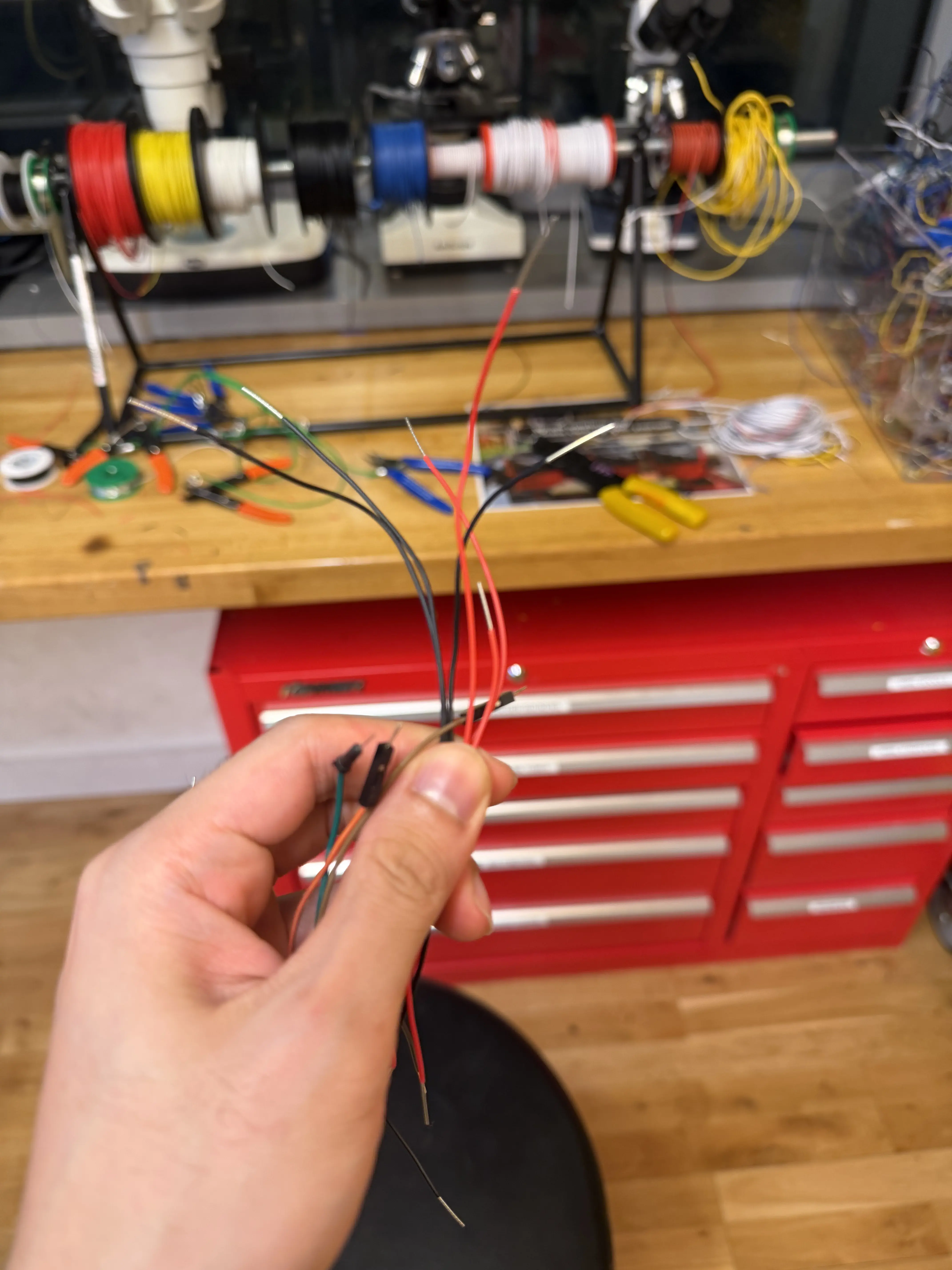
I started by learning how to cut and strip wires properly. But it was quite challenging at first. I'd tried few times, but I couldn't get the hang of it. I was worried that I might damage the wires.
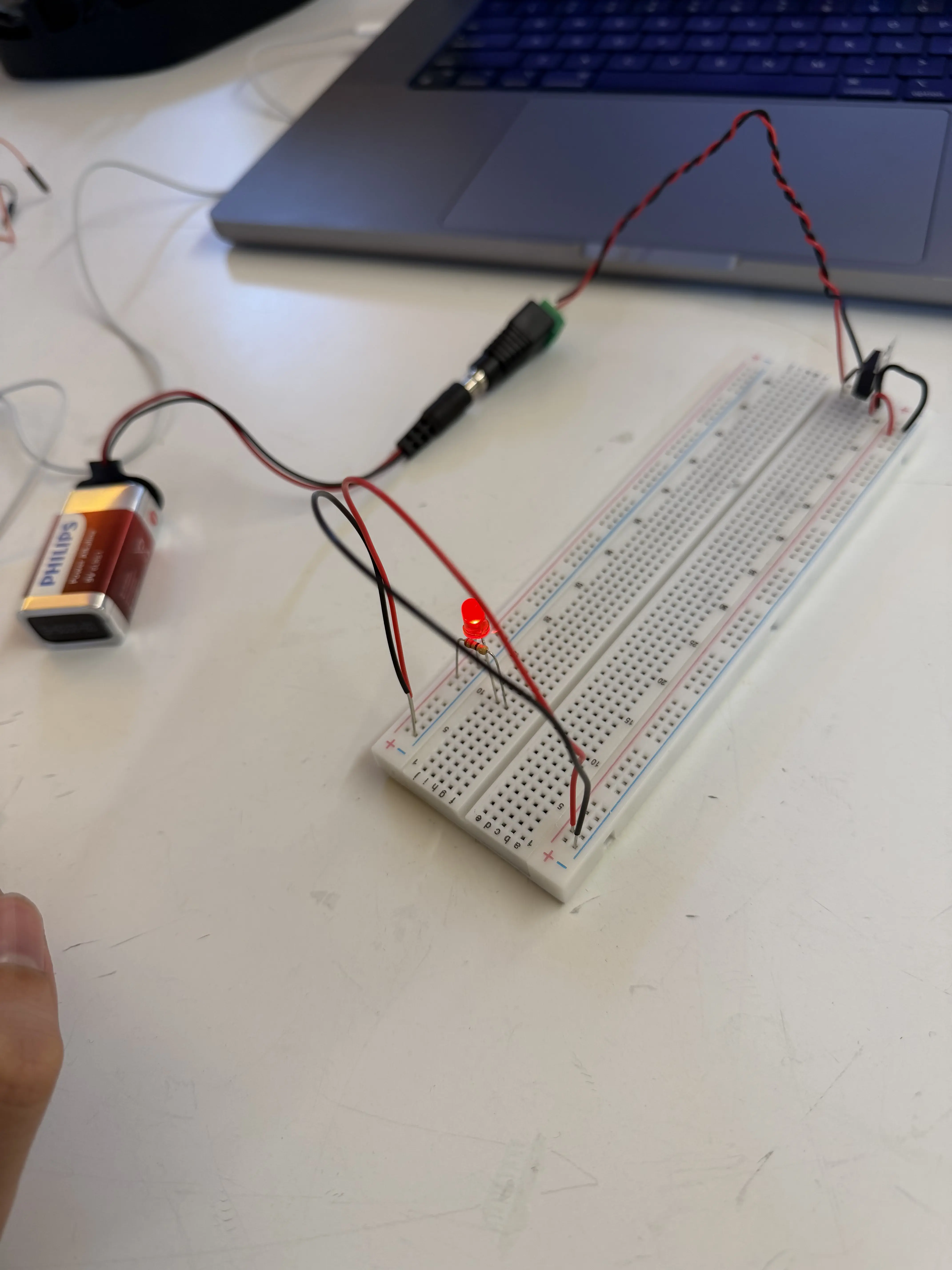
After that, I built my first circuit and successfully lit an LED.
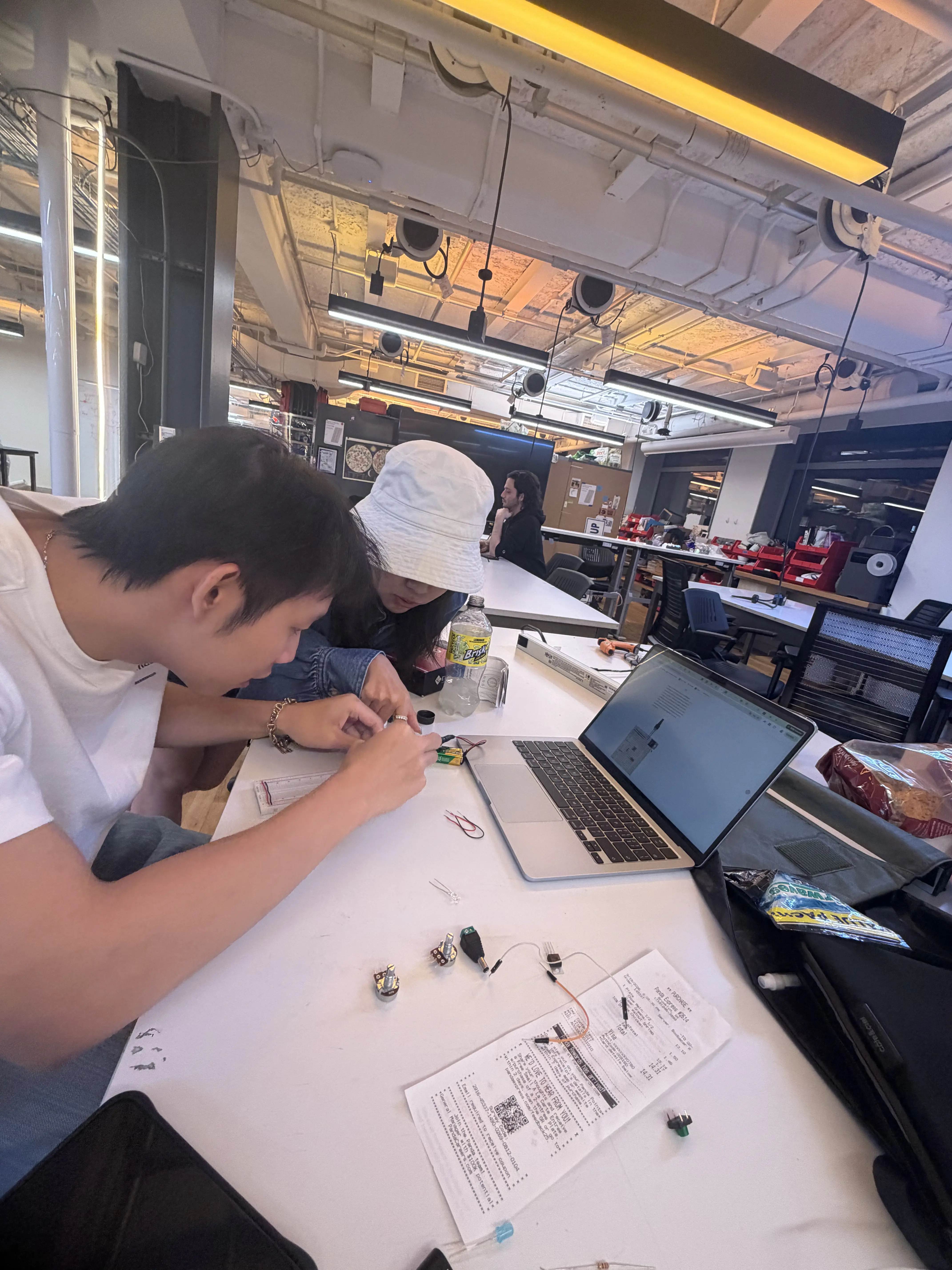
Get Your Hands Dirty
I then experimented with using a button to control the LED.
Finally, I learned how to build a parallel circuit.
Overall, through these experiments and the accompanying quizzes, I learned about Ohm's Law and the relationships between voltage, current, and resistance. I also became familiar with how to calculate voltage, current, resistance, and power in series and parallel circuits, as well as why short circuits occur and why a circuit needs to form a complete loop.
At the beginning, when doing calculations for series and parallel circuits, I needed to write the formulas down next to me so that I could convert between the different values more quickly. After practicing a few times, I became much more comfortable with the calculations.
I also looked into why the positive and negative power rails at the bottom of the breadboard need to be connected across the center gap. This creates a continuous “highway” for the basic circuit, allowing both sides of the breadboard to be used.
I also asked some basic questions, such as why grounding is necessary, what a diode is, whether a light bulb and a diode are the same thing, and whether a resistor can replace a voltage regulator. I was able to get answers to these questions through ChatGPT.
At this point, I don't have any major problems. I just need to become more familiar with how to connect circuits and how to draw circuit diagrams.
"Are we really going to accept an Interface Of The Future that is less expressive than a sandwich?"
After reading A Brief Rant on the Future of Interaction Design and No to NoUI, I gained some important points to think about.
This is especially relevant to me because I have always wanted to explore physical interaction and biotechnology, perhaps even something like using a "sixth finger" I have also always been skeptical about the existence of interfaces. Does something being more virtual necessarily make it better? Does it need to be more subtle or less noticeable to be considered better?
I tend to believe that an interface should be presented in a simple and clear way so that people can naturally understand how to use it. Of course, "interface" is just a term here. I think about it more like how we don't need to consciously learn how to use our fingers to perform complex actions. The interaction should feel natural, almost as if it were an extension of our body, rather than something we have to consciously learn.